Spring Edition

Spring Edition
Spring Edition

Wednesday, November 11, 2020

Product Review ~ Togens 60 Degree Jig Hooks and Slotted Tungsten Beads


If you remember my blog entry on September 16th, I announced that I would be using Togens Fly Shop’s hooks and beads exclusively for my guide service and personal fishing sessions. So far, I’m extremely pleased with the quality and the many different bends Togens offers, and I must again give props to Togens Pro Team Member Cat Toy (https://flyfishingwithcattoy.blogspot.com/) for introducing them to me. I would have never known about these fabulous hooks, and super custom beads without her sage advice on the matter.


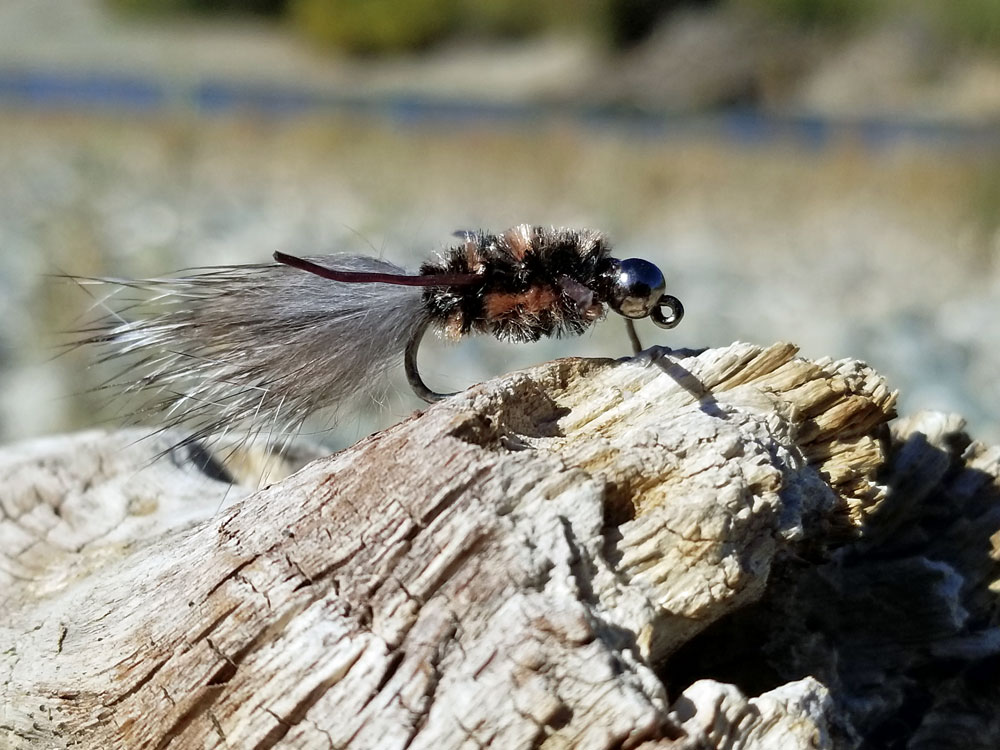
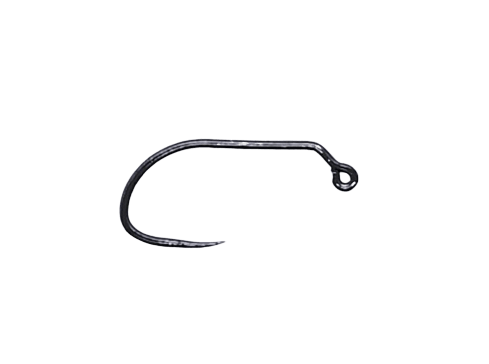
The hook I have used the most so far out of the Togens line has been the 60 degree jig hook, namely in sizes 8, 16, and 18, using both the gold and the black nickel slotted tungsten beads. The Togens jig hook can be used in fresh or salt water. What I like about a jig hook is that it rides hook point up and resists snagging on the bottom, and allows the nymph to bounce along the bottom of the river efficiently during a drift. 

Most fish that are caught on a jig hook are either on the bottom substrate or just above it in the slower and deeper water column. Here, large trout take advantage of the hydraulics near the floor, where they can expend less energy, and constantly feed.  This is the advantage of using the 60 degree jig hook with a heavy front end for a better sink rate, and more of a vertical angle for the fly. 


All Togens hooks are made of premium high-carbon steel, which is hardened and tempered, providing a long point life with extreme sharpness, making it a very hardy and strong hook. Togens hooks use a constant taper. This provides consistency in shape, assuring no weak spots, and gives amazing speed of penetration. Honestly, I’m so stoked I made the change over to their hooks, it has vastly improved my clients, and my own catch rates to the net.

The key features of the 60 degree jig hook are a black nickel finish, heavy wire, and as mentioned above that have a constant taper with a razor sharp point. They come in packs of 50 or 1000. 

With the growing popularity of Euro Nymphing, and American Tight Line Nymphing, more and more anglers are tying with slotted tungsten beads. These beads are built with a slot in the bottom to accommodate proper placing on jig-shaped fly hooks. Tungsten is about 50% heavier than brass, which is what most beads are normally made from. Therefore, these beads ensure your flies get down into the strike zone, and stay there longer. The consistency in manufacturing is really good with Togens slotted beads, and they are exceptionally durable with a corrosion-proof design. Many popular patterns like the Frenchie and Perdigon use the jig hook/slotted bead combo, but I’ve been converting my go to patterns like Yellow Halo, TJ Hooker, and Hogan’s S&M from a regular nymph hook to the jig hook, and the results have been stellar. Check out Togens exclusive Brown Magic finish, it’s super fishy! The slotted Tungsten beads come in 25 count packs.

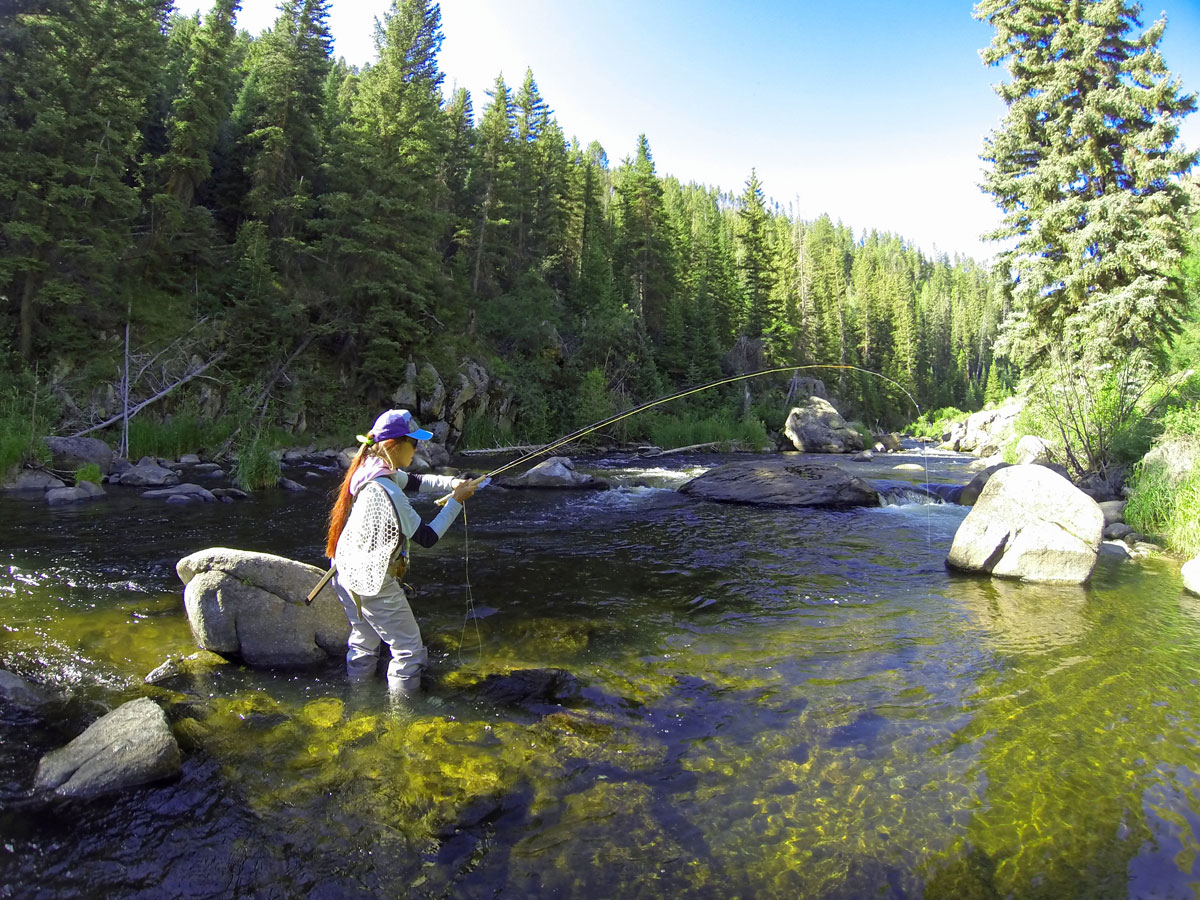
Togens Pro Team Member Cat Toy on the Yampa River, Co.

Being that Togens Fly Shop is based in BC Canada, the exchange rate favors buyers from the US where you’ll save a little money. Enter the code TOGEN10, and mentions “Baiocchi’s Troutfitters” and receive an additional 10% off on your order! See you on the water…


Saturday, November 7, 2020

Lower Yuba River Fly Fishing Report ~ 11/7/2020


I’ve been on the Lower Yuba River quite a bit in the past month and staying below the radar in regards to details and posting. It’s been really good if you know how to play the “Egg Bite” game, and more on that further down later in this post. So, we’ve finally got a change in the weather with much colder temperatures and what looks like some very light precipitation. Wimpy storms are such a tease though. I’m not going to make any predictions, but we could see a few inches of fresh on the crest of the Northern Sierra according to Brian Allegretto of https://opensnow.com/dailysnow/tahoe - bookmark his site, it’s one of my “go to” tools for weather, which translates into flow forecasting on the Yuba River. Another link to bookmark is California Data Exchange Center’s flow forecast here - https://cdec.water.ca.gov/guidance_plots/MRY_gp.html. Fishing pressure has dramatically increased as of late with more boats, and wading anglers. Still plenty of room though, were we can all spread out and enjoy ourselves on the river. Flows have been stable at from 970 to 1,118 cubes.

The egg bite has been on and my guests and I have seen some incredible fishing. As far as numbers go, the egg bite has provided the most abundant of them than any other time of year. I receive so many emails and messages on the details of the egg bite so let’s get into that. There are many different flies, styles, and ways to present eggs. Old school glow bugs, pegged beads, and nymph/bead combos. I use the pegged bead method. Keeping your bead about half an inch to a full inch away from your bare hook is a good move and will almost always see the hook inside the mouth of an egg eater. Any further away and you’re hooking eye balls, gills, and throats. 

Pre rigging different colored beads on a set length of tippet is wise for a quick change out. I use a short length of pipe insulation with a produce rubber band to hold the tag ends of the tippet in place.

“What size eggs are you using”? Egg sizes should be 8mm with clear water, 10mm for dirty water. If you’re presenting eggs on a river that only has trout, 6mm in clear water, and 8mm in dirty water. “What’s the best color”? That varies so much from day to day, the actual age of the egg itself, and the location on the river that I can’t even answer that. Fresh roe has a red hue to them, and as they age they become more orange and lighter in color. On my last 4 guide trips, shades of red did well in the morning, then lighter creamy orange in the afternoons. The angle and lower arc of the sun has much to do with this during the fall season. Many different colors are offered from https://troutbeads.com/ - Check them out.


I’ve been teaching my guests how to effectively long line tight line nymph this fall on the Yuba River, yep, no indicator needed. It’s a much simpler and cleaner rig with less hinge points in the system, which really helps those with beginner skill sets. I will say though, the key to success with this style is you must keep your slack to an absolute minimum, stay 100% focused on your drift, and set the hook when in doubt – Hook sets are free, so do it often. You’ll be surprised. 

The cool bonus to LLTLN is that you can let the rig swing at the end of the drift and let it hang in the current for the grab. If you want to learn this valuable nymphing technique that was taught to me by my good fishing buddy Roger who puts in 150 days plus on the Yuba River, get on my calendar.

Feather River hatchery steelhead

I’ve been using eggs, worms, stones, and small baetis nymphs for flies. When in doubt, add more split shot or use heavier flies to get down, especially with heavy current. I’m amazed how fast of water the resident trout and steelhead can hold in. All they need is a small deflection on the bottom substrate to shelter from the current, like a large cobblestone, and they’ll be there. It’s so cool! These trout are superior athletes that are basically finning on a treadmill 24 hours a day, 7 days a week. Pound for pound, they’re the strongest trout in moving water I’ve ever fought. 

Hatches are sporadic and light, you’ll find some localized PMDs duns on the surface in the bigger flats, a few caddis, or a few BWOs, but really, it’s all about the high protein content of salmon eggs for the trout right now. 

I’ve been talking with the fisheries biologists on the river doing spent salmon counts, and they have said the salmon return this year is much better than in the past 5 years. You can see the past counts from the graph above. It wasn’t that long ago when the salmon population was 5 times as much.


Your best bet for success is to find the salmon redds that are active with spawning salmon, even better if they are in the process of “cutting” a new or existing redd with their tail fins. When the salmon do this, they are stirring up other food items such as free living caddis, mayfly nymphs, midge pupa, and aquatic worms. These trout will move on from one area of salmon redds to another. Every day is different, and observing more and casting less holds true. 

Photo courtesy of Bill Burden

FYI, and this has been repeatedly said over the years, is for walk and wade anglers to be aware and do not walk across the salmon redds, whether they are new or old. Mother Nature has an effective way of protecting the eggs within the smaller cobble stones from harm. It’s during the alevin stage is where they are most susceptible to being crushed. So, do not walk through salmon redds, and if you must wade around them, do so upstream of the redd that has a dark color and mossy character to the bottom of the stream bed. Many of my guests have no idea what a salmon redd looks like, and this is why I love to educate those fly anglers during my walk and wade trips, where one can truly get up close and study them. Bright clean, to slightly clean depressions is the telltale sign of a salmon redd, whether salmon are present or not. The eggs are in within the redds for 57 to 60 days depending on water temperatures.

A change in the weather is going to do some good, I’m anxious to get back out there myself, it’s been fun! I have some open days through the rest of 2020, if you want to learn more about the Yuba River, and the best way to approach it from a walk and wade perspective, email me at baiocchistroutfitters@yahoo.com  

Busman’s Holiday – Trinity River & the Lower Sacramento River

What a trip! My buddy Trevor Fagerskog and I hit it perfect! The first part of the trip was a float on the Trinity River with Brian Clemens of Nor Cal Fly Guides. Despite no new rain, we found many steelhead. Location, flies, and techniques will not be disclosed as advised by our guide. If you know…you know.


Day two was on the Lower Sac, again with Brian. It my first time floating it and to be honest I haven’t fished it in over two decades! That’s a long time, but hey, business has been booming for that long. It was a totally different experience than the day before which I would describe as a wilderness adventure. The Lower Sac is quite the scene complete with pirates, a flotilla of drift boats, and really nice houses right on the river. The fishing? We hammered them as you can see below! Eggs, stones, tiny mayfly nymphs, and caddis pupa all were effective. Typical Lower Sac treats for the resident trout and steelhead. I’m looking forward to my spring trip with Tahoe Truckee Fly Fishers, it’s going to be awesome!


See you on the banks of the Lower Yuba River…


Sunday, October 25, 2020

Loon Products ~ Camo Drops ~ Rogue Hook Removal Forceps ~ Rogue Quickdraw Forceps ~ Rogue Nippers


I'm really stoked on life right now as I'm making my transition from the Northern Sierra to my winter guiding schedule on the Lower Yuba River, which allows me more time for special projects like writing articles, creating new power point programs, planning for 2021, and gear reviews like this one. So for this product review, I'm covering some basic needed essentials for the fly angler that can be used for rivers, creeks, or your favorite stillwater. 


There are 3 elements that effect your drift for a successful presentation while nymphing. The depth at which your fly is at, the angle of your rig which is altered by the force of the current, and the drop, which is the amount of split shot we add, or the weight to the fly itself. Tight line nymphing is best done with your heaviest fly on the bottom of the rig, but this doesn't always work, especially when fishing tiny flies in sizes 18-24. I actually fish these small flies while tight lining quite a bit on waters like the Little Truckee, and the Stagecoach tailwater of the Yampa River. You can only put so much weight on a fly that is so tiny, namely a 1.5 to a 2.0 mm tungsten bead, but you can add more weight to your leader, and this is where the Loon Camp Drops come into play.

I've been using the Loon Camo Drops for the past month on dozens of trips and they are now my favorite split shot to use. These non-toxic split shots are made of tin and also feature a non-gloss matte coating, plus a textured finish to prevent slipping. They are much easier to take off than the other similar brand I've been using for the last few decades, and the paint also last a little longer too. The different colors allow the angler to match the natural surroundings of that particular watershed they are fishing. I use the bright green drops on the Little Truckee River, and the dark green drops for the Middle Fork Feather River. Loon Camo Drops come in sizes 6, 4, 1, BB, AB, AAA, SA, SSG and 2SSG, and the easy to use dispenser is quite handy and fits easily in your vest. 


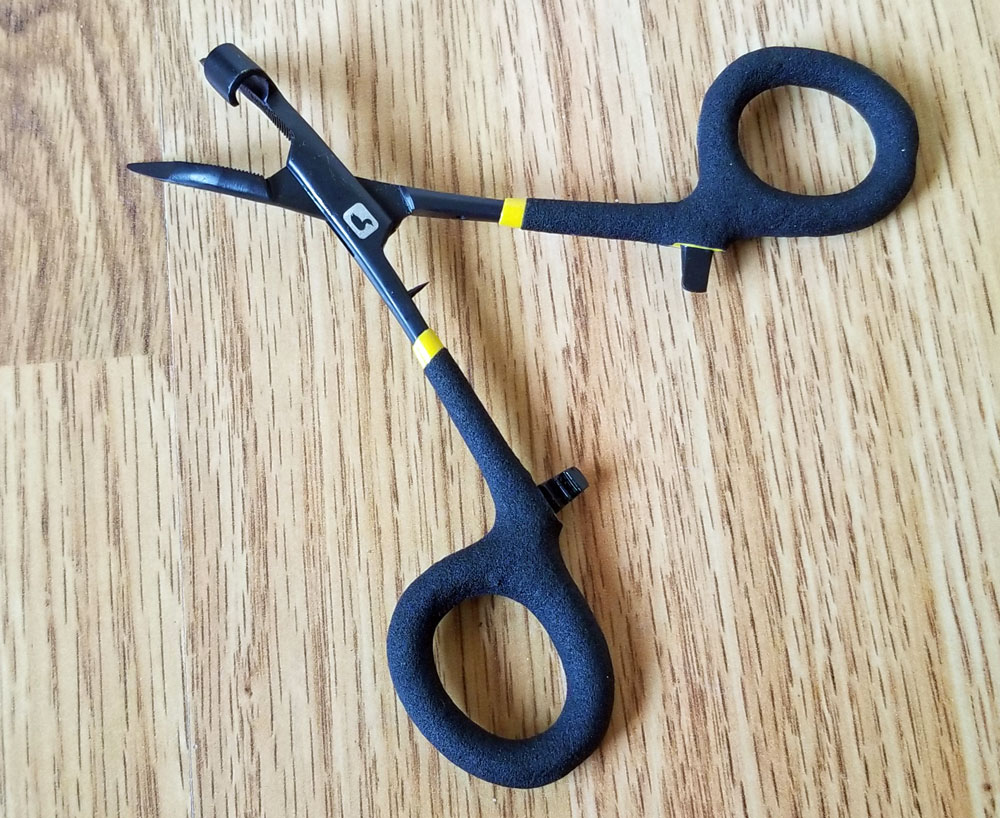
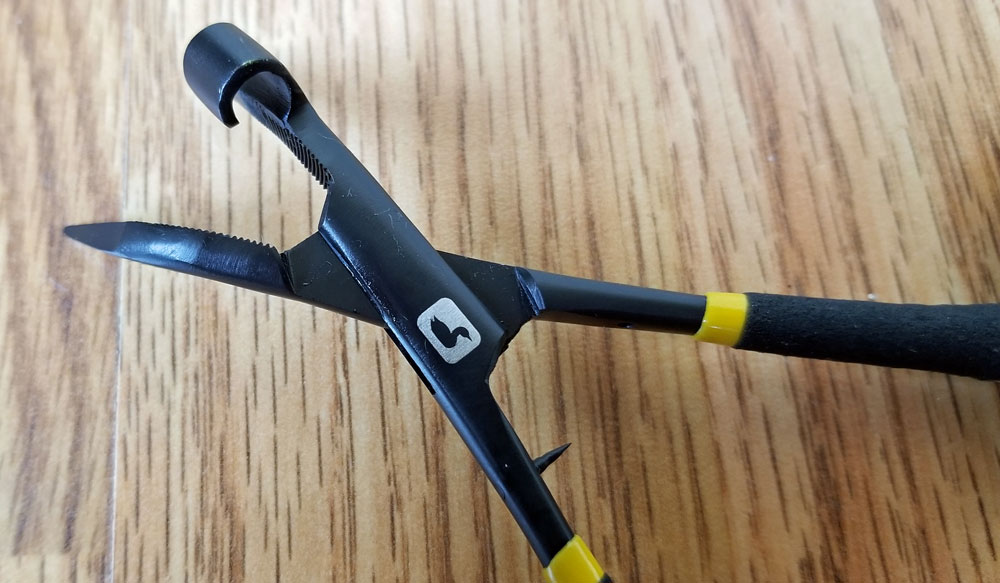
The Loon Rogue Removal Forceps are pretty cool, though I will admit it that it took me a little while to get used to them. Mostly it was the curve of the tip, where the smooth part of the jaw was located past the hinge, and the the other features like the serrated section of the jaws and the hook removal feature. The ergonomics of them are comfy but I'd like to see the finger loops a tad bigger for even more comfort and performance. The hook removal feature is a great asset while taking out flies that are delicate while a trout is thrashing about, namely a Jay Fair fly that has marabou incorporated into it that easily tears off the fly. 


These well made forceps are 5.5" long and feature a stealthy matte black rust-resistant finish, comfy rubberized grip that provides extra tackiness, and made of surgical quality stainless steel. Other features like the the double positioning locking handles really work well and can hold a 2mm tippet ring in them without slipping as one pulls down and sets a good clinch knot. Now that I'm used to the Rogue Hook Removal Forceps, I can't fish without them.


One bad ass tool, the 
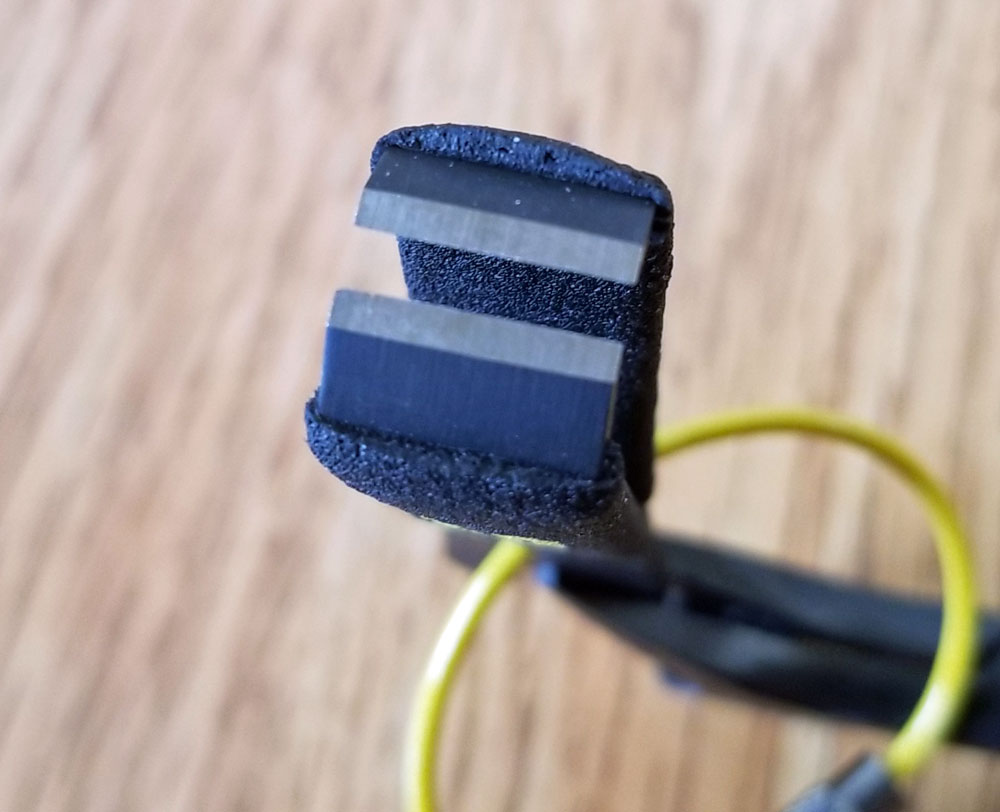
Rogue Quickdraw Forceps are at home on your hip, or on your tackle bag in the boat. The ergos on these industrial forceps are extremely comfy, and allow the user to quickly lock the jaws in place and unlock them easily. Oversized thumb and finger holes accommodate large or gloved hands. The carabiner style quickdraw is the best feature on these when you're short on time, and seconds equal success in completing your task at hand. The clip is also easy to disengage when you need them and helps the forceps stay in place and not lose them. I really like the scissor feature which allows me to do multiple tasks without changing tools. The pair I received were a little sticky at the hinge, but some Tri Flow lubricant solved the problem and they are now smooth and free moving.


The Rogue Quickdraw forceps are 6.25" long and also feature a flat geometric jaw for easy hook removal/debarbing, double-dipped handle for added comfort, a eye clearing needle for flies, and a two stage position locking handle. These are a must have!


Last on this product review is the Loon Rogue Nippers. Not much to say about nippers, either they work well, or they don't. These DO work well and they are very sharp which means less physical effort needs to be applied when using them. This is essential when it's super cold out and your fingers are suffering from the conditions. A double dipped rubberized coating adds comfort and keeps them from slipping out of your hand. Nip, snip, and you're done.

Check out Loon's other products on their site, and special thanks to Hogan Brown for hooking me up with these awesome tools and other fine fishy products!


Sunday, October 18, 2020

Middle Fork Feather River Fly Fishing Report ~ 10/18/2020


An Indian summer is an understatement for our current weather. Yesterday was 82 degrees in the Graeagle area, with a low of 36. Yes, we need some rain! Fall colors have really come on in the last week, it’s beautiful here, especially along Hwy 89 between Graeagle and Truckee.

The Middle Fork Feather River continues to fish well and the conditions have not changed much from my last report. Water temperatures are 55 in the early morning rising to 60 degrees. Fishing pressure is light. Same flies are bringing fish to the net, and tight line nymphing is your best option. There has been better dry fly opportunities with more aquatics out including more active October Caddis adults, and increasing numbers of BWOs. You’ll want to fish during the middle of the day into the late afternoon.

Hiking far and getting into remote sections has really been paying off. I’ve been taking my guests to areas I have not visited in 5 to 10 years. If a particular section has not been fished in a long time, expect red hot action.


The river closes on November 15th. If we continue to have warm weather with little precipitation, I see no reason why the river would not fish well until the closure. With so many fisheries going off right now, it’s tough to pick which one to fish. That’s a typical scenario in Northern California for fall ball, so much water to cover, so little time. See you out there on the water among the blazing Autumn glow. 


Wednesday, October 7, 2020

Middle Fork Feather River & Lake Davis Fly Fishing Report 10/7/2020


Finally a change in the weather this coming weekend with cooler temperatures, and some actual precipitation falling from the sky. It is so needed right now. The ground is so dry it’s become like powdered sugar. At least the air quality is much better now with less smoke and just a haze, some days there is more blue sky to be seen. Fall colors are slow to come on as well and varied depending on the location. It’s been hot, way too warm for this time of year. Yeah, a change in the weather will do so much good for everything from fishing to hunting, and my other release when I have time – Mountain biking on single track with chocolate cake loam.

Since the weather is cold in the morning and hot in the afternoon, you will be peeling off layers all day long, and in some instances sweating bullets on the hike out of the more remote canyon water. Bring a day pack for all your layers, lunch, and other personal needed items on the river. Once I leave my truck with my guests, we’re not coming back to have lunch, we stay down on the river, cover water, and take in the total experience.


The Middle Fork Feather River still continues to fish well, my guests and I have been having some awesome days with good quality wild rainbows and the occasional brown trout mixed in. Water temperatures have been 57 in the morning rising to 62 degrees in the afternoon. The best action on the water has been from mid-morning to early afternoon, then the evening hours. Fishing pressure has been light and most days we do not see another angler at all. They don’t call it the Lost Sierra for nothing.

Tight Line Nymphing has been the most productive with some of my guests getting double digits to the net. The biggest fault I see with my guest’s presentation is after making the lob cast upstream, they are not picking the leader up quickly enough and making direct contact with their flies as they should. Many of the fish are eating the flies right away, so you got to be on it. 

Also having too much of the leader out of the tip with a bow in the system as well, too much slack and you will be missing strikes. Lastly, not leading the flies enough with the tip of the rod and pulling them through softer and slower water. Those three elements are crucial to feeling and seeing more strikes which results in more hook ups.


Effective flies for the Tight Line rig have been jiggy flies like Yellow Halo, KGB Caddis, Flashback Pheasant tails, and Pheasant Tails with a hot spot collar in orange or pink. Other good flies to have are Zebra Midges (even down to size 20), Hogan’s S&M and Military May in classic fall BWO colors, Black Beauties, Psycho Prince nymphs, and RS2’s in black. 

I like to trail the small flies off the bend of the hook of the larger jig fly to show the trout a more natural presentation – Though detecting the strikes on those smaller flies will be harder and one must keep a tight leash.

Not much dry fly action has occurred except with the adult October Caddis. I’m thinking the hot weather has put off most of our classic fall mayfly hatches in prolific numbers – That will change once we get some rain, and the precipitation will get those trout on the move migrating throughout the river system. We shall see.


As for the bugs, I have not seen this many October Caddis shucks on the rocks since before the big flows of New Year’s day in 2005 which gave the big bug pupae a ride to Lake Oroville in a hurry. In the last few days I’m seeing more flyers during the middle of the day too. The Trico spinner fall in the mid morning is waning but those trout are used to seeing submerged spent spinners in the drift and why I have been putting the tiny black patterns on the Tight Line rig. 

Also in the past week I’m now seeing sparse hatches of mayfly adults including BWOs, Isonychia, and Mahogany duns. They should increase in numbers with the cooler weather on the way. Caddis are out too in a variety of sizes. Non aquatics includes hoppers, a robust population of crayfish, and remember, with 6 golf courses in a 10 mile radius when it rains many earth worms are displaced and enter the river – That’s when you fish the flesh Juan worm.

Right now with low fall flows, the key to success is fishing the deeper water whether it is a plunge pool, slot, or tail out. That’s where the fish are. Skip the skinny water, but also do not over look the hidden nooks and crannies that most anglers pass up. Those unmolested areas usually harbor the larger trout. So you’re thinking, ok… just hit the deeper water and I’m set. There’s more to it. You will have to hike great distances to reach all those deeper spots. Stick and move, cover water, and on those bigger pools go through 2 to 3 times with different patterns. It makes a big difference.


Lake Davis

I’m not ashamed to say that my Tracker Pro Deep V 16 is inoperable. Shit happens. It ran great in June, then I put it away until the fall season. When I went to pick it up a few weeks ago it would not turn over and the trim tab would not work, yet the batteries are less than a year old and always plugged in at full charge. I thought…No problem I’ll have it serviced. Well, everybody and their mother want their boats winterized and it won’t be until the middle of November until I can get my boat in. If the lake cools down quickly in the next two weeks I can guide off the bank no problem with the right clients that possess the needed skills of being able to cast far, accurately, and have good trout stalking skills (ninja level). So for now I’m just going with the flow. I can tell I’m getting older and wiser during situations like this, it’s beyond my control and there’s nothing I can do about it. Being mad and frustrated won’t do me or my guests any good. Thinking positively and listening to my life coaches has helped me so much – Thanks to all those and your wisdom!

I do have friends and past long time clients that have been fishing the lake in the past few weeks and here is the scoop. Water temperatures are much warmer than normal due to the continued hot weather, currently they are 60 in the morning rising to 64 in afternoon. Most fish are scattered throughout the lake and are 6 to 8 feet down in 10 to 12 feet of water, though others have been marked by sonar even deeper. The browns that were planted a few years ago are reaching the 18” mark, that’s really cool as they will be eating the smaller bass that are so prevalent. Hatches include blood midges, the little chartreuse midge, and a sparse hatch of Callibaetis. Bigger flies are starting to be more effective like leech patterns and Jay Fair woolies, and trolling flies. Remember, the go to fall colors for Davis and Frenchman are fiery brown, rust, and burnt orange.

Lots of watersheds, lakes, and fisheries are going off, after all, it’s the fall season. It’s go time…See you on the water.

The pitfalls of learning the craft of Tight line Nymphing


Total Pageviews