Spring Edition

Spring Edition
Spring Edition

Thursday, February 11, 2021

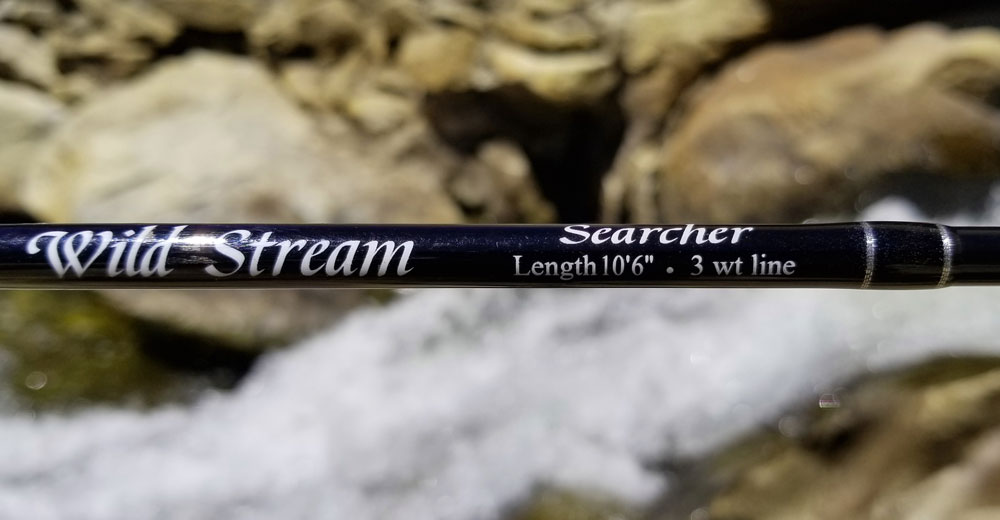
WildStream 105 Searcher Light Steelhead Rod Review


Though I’ve had the highly anticipated Searcher 105 (10 foot 5 weight) Light Steelhead rod for 3 weeks, I finally was able to do a thorough test and fish it last weekend on the Lower Yuba River. Compared to its younger siblings in the 3 and 4 weight ranges, the 105 is a much beefier rod that really surprised me by its performance. The 105’s design was intended to be a Euro nymphing rod for large trout/steelhead, but in reality, it is a very versatile and efficient tool for big water like the Yuba.


Construction: like the other Searcher models, the 105 is made of IM 10 graphite which is a weave that offers superior modulus of elasticity and the some of the highest grade graphite material available for rod manufacturing. The characteristics of IM 10 is one of being extremely lightweight with crisp responsiveness which delivers pinpoint accuracy, and a thinner side wall in the tip section for extra sensitivity that will transmit every tick on the bottom substrate, or the lightest grab from your quarry. The butt and mid-section is of a 7 weight caliber and you could most likely pick up a small toddler off the ground. Now that’s some serious back bone! In fact this rod reminds me of the older Scott Power Ply fiberglass 7wt. that was made in San Francisco. 


Action/Fishability: The action of the 105 Searcher is much different than your standard fly rod and takes a little bit to get used to. The butt section is very stiff, and the mid section has a medium flex, while the tip is soft, but not as whippy as the 1063 or 1064 Searcher. Because the 105 is so versatile, I’ve broken down the specific uses in sub categories that the user will be fishing it with below.

Euro Nymphing: Because the tip section is not as whippy, the 105 struggles with lob casting lighter weight jig flies, but to compensate for that, one must use a heavy anchor fly with the multi fly rig. The sensitivity though is still great and allows for the user to feel their flies tick the bottom, or see the sighter on the leader twitch and dance when a strike occurs. As I stated before, this rod was designed for big water and large trout/steelhead, and if Euro nymphing is your thing it is the perfect tool for that medium. Though the 10 foot length is not exceedingly long, it’s still plenty enough to reach out, or to keep the leader off the water while keeping a good angle down to your flies.

Dry Flies: When I first held the 105 Searcher and flexed it, I had a feeling that it would be a decent dry fly rod. Well, I was kind of right, but I did not realize it would surpass my expectations for such. I attached a Sage Spectrum LT 5/6 reel spooled up with a RIO Perception 5wt. weight forward floating line and fished the Skwala hatch making near to far presentations. Wow! I was impressed to say the least. For far off targets, it could shoot out line with a high level of accuracy in the 50 to 70 foot range. The coolest aspect of the 105 Searcher when fishing dry flies is the fact that the softer tip protects light tippets during the hook set, and while fighting fish. That’s a real bonus. 

Indicator Nymphing: Because the 105 Searcher excels with a heavier rig, it is the perfect boat rod when fishing multi fly indicator rigs with added split shot on big rivers like the Lower Yuba, or the Lower Sacramento. It is able to mend large amounts of line effortlessly, and water loaded casts are a breeze to present. The more I fished the 105, the more I realized that it truly is in a class of its own and very unique compared to the rest of the Searcher line.


Streamers: I did not get a chance to chuck big heavy streamers with the 105 Searcher, nor did I get to test it with sink tips, or full sinking lines. Though, I have a feeling it would be good for such. The 105 is just plain strong, and with the hardy back bone it employs, it could well be a very effective streamer rod, especially out of a boat. I’m also betting it would make a really good stillwater rod as well. I’ll keep testing it for these latter techniques and venues in the near future.

My overall opinion of the 105 Searcher is good to great. It can do it all for large fish/steelhead, and because of its lightweight, you’ll be able to fish it all day without much fatigue. It fights large fish very well allowing the user to have complete control of the situation, while reeling in the prized catch quickly. If you fish the big tailwaters or the coastal rivers of the west coast, you might want to have this rod in your arsenal. $240, comes with an extra tip and a case. 

It's Chinese New Year, a 2 week celebration of family and friends in China. This has caused a black out on communication with WildStream owner Jack Gu. We are working on rebuilding a non hackable website as the past one was destroyed by hackers. We only use PayPal for funds so never accept any other offer to pay. PayPal protects the seller and buyer. You can still order at wildstreamfishing@gmail.com, Attn: Jack Gu, or call James Kissinger at 7757371306.


Wednesday, February 10, 2021

Lower Yuba River Fly Fishing Report ~ 2/10/2021


It’s been a blur with trips and adventurous fun since my last report. I think this could be the busiest I’ve ever been during the winter season. I’m pretty dedicated too, getting up at 3am to keep up on answering emails and following up on trip details, then rigging rods with fresh materials, tying some flies for the day, and working on media projects like this blog. This is all before I even pack the truck and head down to the Yuba River, and what most clients do not even realize happens. To say I’m a full time guide is an understatement, more like a full time fly fishing ambassador! 

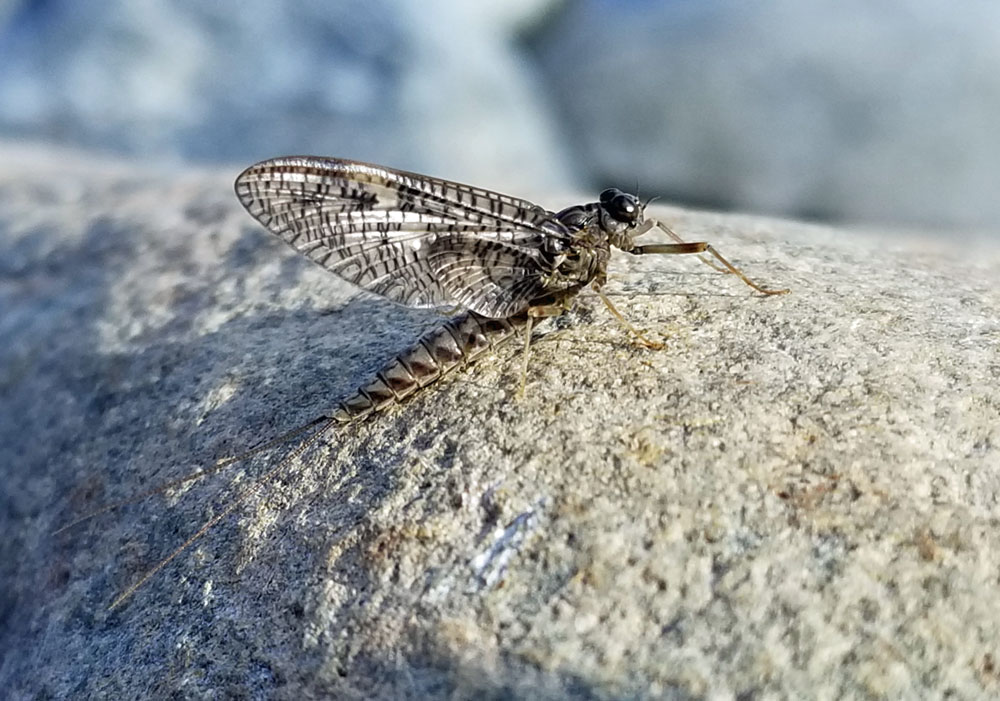
Male Adult Skwala, Note the cross on top of its head

Thank you so much for all the kind words regarding my latest presentation “Skwalas on the Yuba”, the response has been overwhelming. I think the coolest chapter in the program is the other game we play before the Skwala activity in the afternoon – Mayflies! If you haven’t seen it, my next presentation will be to my fellow members of Tahoe Truckee Fly Fishers on the 18th. Check it out!

Well, let’s get on with the report. We had a few storms push through, the first was a pretty good one on the 28th of January with the flows coming up to 1,600 cubes, a nice little flushing I must say. The flows cleared up within a day and it was game on again. The last one on February 2nd was just a little blip with flows coming up maybe 50 cfs, and really no change in clarity. 

Lately the upper river has a very slight tint of color, while the lower river is ultra-clear. Overall, those fish are pretty spooked out and on edge with the gin clear water...Bring your stealth game. Currently the flows are at 740 cubes. Another series of wimpy storms and moderate precipitation will roll through for the next few days. Good mayfly weather…

Fishing pressure has been really crowded to nonexistent. It just depends on the day and the location my guests and I venture to. We did have an experience last week that shows how uneducated new anglers are to river etiquette. My clients were spread out on a flat fishing a PMD hatch and having some good success. 2 guys walk into our area and I could tell right away they wanted in. Before I knew it, this guy wearing a big white cowboy hat just starts walking in between my clients as if getting ready to fish. I spoke up asking of his intentions, and he said “Oh, I’m crossing the river”. I just let it go as to not ruin our day but there is a lesson here for all of you to learn from, and that is to ask first. Communicate. Be friendly. Show respect.

As for the fishing, it’s been ok, to shitty, to super good. That’s what I call typical Yuba results, well…except during the egg bite. For me and my guest early morning nymphing has been slow, it seems to get better after 10am, and that’s just an observation. My days start with long line Euro nymphing, then setting up in an area for the mayfly hatches, once those wane, it’s full on Skwala tactics fishing the adult to around 4pm, Rinse, and repeat the next day. 

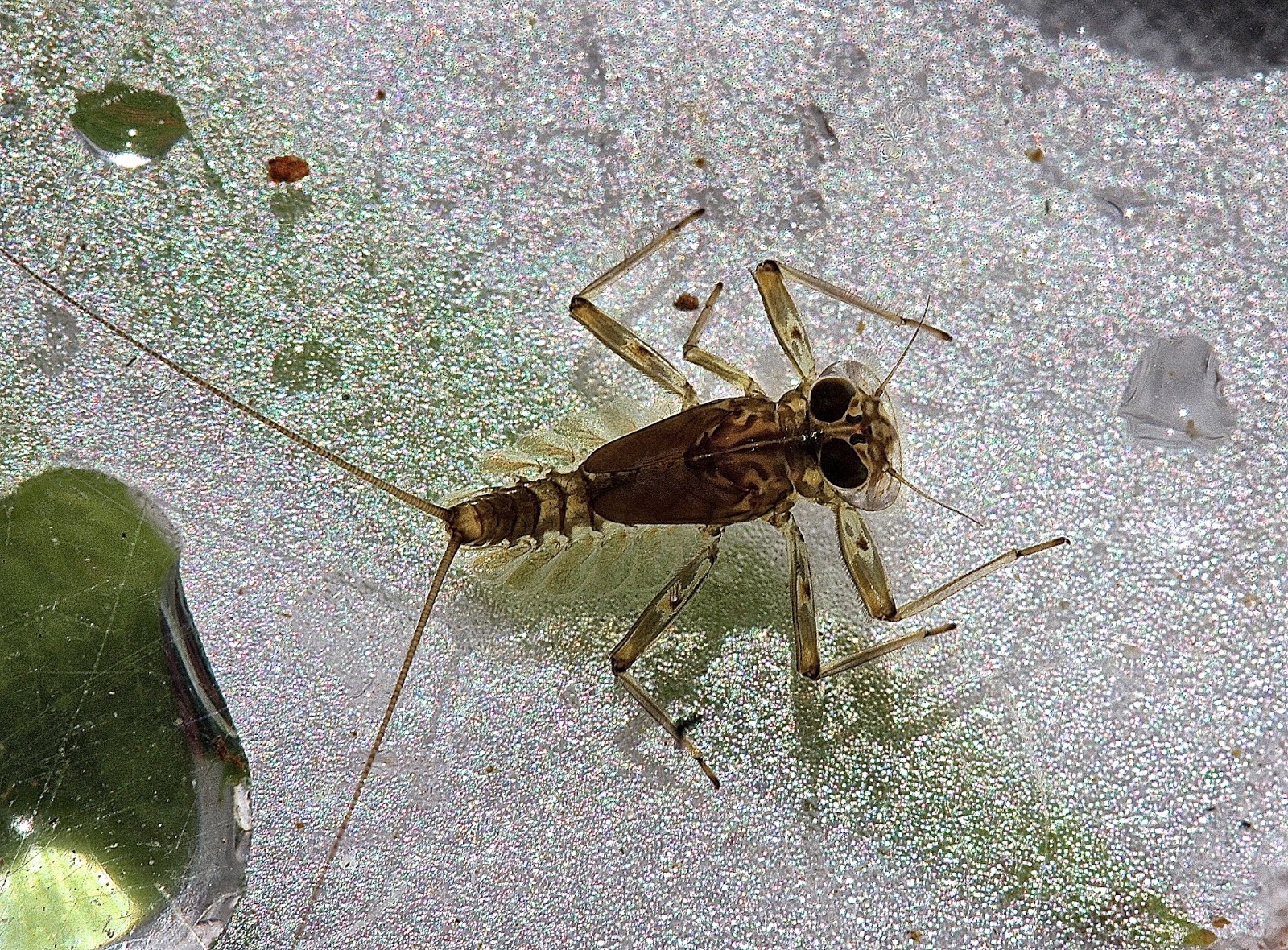
There are way more mayfly hatches around the bridge and upstream than down below. PMDs, Pinkies, BWOs, and Brown Duns are all active, though every day is different. We’ve seen some interesting trout behavior too, where there will be multiple species of mayflies on the water at once, but the trout are keyed in on only one of them. This is called a masking hatch, and often it is tough to figure out. One must actually look at individual duns floating down the currents and watch if they are being eaten or not. Too make matters more complex, they can switch from PMDs to Pinkies during hatch time. Observe more…Cast less. Then make a plan.

Top flies under the surface for my guests and I have been Skwala nymphs like my all-rounder jiggy Skwala, Brian Clemens Skwala nymph, Hogan’s S&M in a PMD scheme, Mighty Mays, super small free living caddis patterns, and pinkish Frenchie jigs. On top…for the Skwala…The Unit Skwala just keeps on producing, and there is no need to clip off the black foam over body. It’s a decade’s long proven pattern. Also, Bud Heintz’s Rough Water Skwala has hooked quite a few fish. When it comes to Skwala patterns, keep them on the small side and eliminate all the bells and whistles, there is no need for them. As for the hatch itself, I would call it moderate for now. 2020 was special, I don’t think we’ll see that this year, but the fish are actively looking up in the afternoons and moving into the side water and foam lines looking for Skwala cookies. Mayflies…Sparkle duns, comparaduns, cripples, loop wing parachutes, and anything CDC, with obviously the right color scheme for the individual mayfly you’re trying to imitate. I haven’t been playing the Alevin game too much, it’s just been so much fun playing the aquatics game, and watching the hatches materialize.

Spring is near, and slowly creeping in. I’ve noticed the Pacific chorus frogs are out and starting to chirp on the warmer days. I’m also starting to see some warblers and songbirds migrating through. March Browns will be out soon, and only time will tell. I’m not going out to Colorado at the end of the month as planned. It’s too hard to walk away from prime conditions on the Yuba River at this time. So, I’ve got more open days available. If you really want to learn how to be a proficient walk and wade angler on the Yuba, shoot me an email at baiocchistroutfitters@yahoo.com if you want in. Dates go incredibly quickly, so act now.

See you on the water…

Pinky Nymph ~ Pink Albert ~ Epeorus


Thursday, January 28, 2021

6 Keys to Fishing the Skwala Adult ~ 1/28/2021


There is common misconception when it comes to fishing the Skwala stonefly adult on the Lower Yuba River. Many anglers think it's just a matter of throwing out this big dry fly and like magic, a native Yuba Rainbow will blow up on it. That's really not the case at all. Sure, there are times that happens, but most often it takes a lot of skill and a serious approach to be successful. Below are 6 keys that will help you understand what your up against, and the solutions for each particular problem you will face while on the river.


This lesson was taught to me by my mentor Jimmy (pictured here) many decades ago. By observing more and casting less, you're further in tune with your surroundings. "Keep your head on a swivel" is a saying I like to share with my guests, it pays to look around and take notice of rising fish, Skwalas in the foam lines drifting, and anything out of the ordinary. Too many anglers will pound the same water with cast after cast, over and over. Rest the fish...Let them eat a few naturals...Observe...Then make a calculated presentation.


Fly anglers need to realize that they are fishing for an elusive wild animal that is on high alert, and very scared when in shallow water next to the bank. Stealth is an absolute must, sometimes it's hands and knees to keep an even lower profile. Although, fishing rougher water, or water that has a ripple to it, will actually mask your presence more and also hide your flaws in your presentation. Remember, you're not just fishing...You are hunting. Make a plan, be confident in your approach, and execute it with precision.


In the sequence above, I'm fishing near to far at Separator Rock. There are no rising fish and I'm simply covering water and searching for the most opportunistic feeder. First I cover the section on the left with an incoming foam line and current. I'll make 4 to 6 casts then move on to the middle section, an idle patch of foam. Then, I concentrate my efforts on the right side, where a back eddy current has a foam line coming upstream and right at me. After those smaller sections are dissected, I then fish the large area of the incoming riffle, and the transition zone of shallow to deeper water.


This is the most effective presentation when fishing off the bank on the Yuba. In doing so, you're presenting your fly first, and the fish will be more receptive in taking your offering as the fly enters its cone of vision first. There is no fly line or leader that will be seen by the fish - Just the fly. Skwala stoners do not bounce around the water, or flap their wings like a Golden stone does, nope, they simply drift placidly with the currents. That's why a drag free drift is so important. The bump feed is hard to master, and this is where a good instructional guide can really help you elevate your game to the next level.


You've all heard the saying by now, "Foam is Home", and every bit of it is true. Foam patches from back eddies pictured above actually trap floating adult aquatic insects. Trout love these foam patches as they offer superior cover and protection from predators, and also a reliable source of food. I will often watch these foam patches for a good 10 minutes as sometimes you'll see a nose of a trout poke up and consume an adult Skwala stone. Adjust your position to maximize your efforts, and make that first cast count.


The biggest mistake I see anglers make is that they fish the same piece of water for far too long. That's fine if you've got a single fish rising, or a pod of them, but the more you move, the more success you will have in reaching higher numbers of fish to the net. Above I'm in the "Searching" mode, and working upstream quickly, yet also being observant of every detail that surrounds me. If I do encounter a rising fish upstream of me, I'll make a plan of relocating upstream of the fish carefully without spooking it, then making a downstream bump feed presentation to my quarry...Fly first.

These are just some tips that will surely help you when stalking trout off the bank not only on the Yuba River, but all rivers, streams, and even creeks.

See you on the water...

Tuesday, January 26, 2021

Lower Yuba River Fly Fishing Report ~ 1/26/2021


Before I go into my report I would like to share my perspective on the current heavy fishing pressure of the Lower Yuba River. First off, the Yuba is owned by the people of the United States as deemed by the Public Trust Doctrine, everyone has a right to enjoy it for all recreation activities so long as it does not harm the watershed, or violate any federal, state, or county laws. Is the Yuba River being loved to death by fly anglers? You bet it is, as is other sensitive rivers like the Little Truckee. Blasting other anglers on social media is not the answer. Education to others on being a good steward of the Yuba in a respectful manner is the answer. I’ve been asked to tone back my fishing reports because of the increased fishing pressure. Sorry, my family has been sharing and promoting healthy fly fishing, and detailed conservation efforts since 1970, and I’m not going to stop now.

I’m suggesting that every fly angler that fishes the Yuba, or guides that make a profit off the Yuba, get involved to preserve and protect the river. This goes beyond picking up trash, which is a feel good type of act, and makes one look very “well to do” on social media, but does little in the big picture for the wild salmon, steelhead and resident trout. Loss of habitat, flow regimes, water transfers, and ancient dam operations play a much bigger role in the health of the Yuba. You’re asking, “What can I do?”


File a formal complaint to federal, state, or county agencies. Here is an example above, just one of thousands that the Baiocchi family has submitted in the state of California for all watersheds and it’s ecosystem including fish, wildlife, habitat, and the bugs

Donate your money to conservation NGOs that are involved with the Yuba River. Here are some of my favorite groups that I donate to: (click on each one for pertinent links)

SYRCL
Gold Country Fly Fishers
Trout Unlimited California including all regional chapters
Cal Trout

Get involved with hands on volunteer work like the yearly willow count on Hammon Bar through SYRCL. If this message reaches 1 in 10 anglers that fish the Lower Yuba River, it can make a difference. I realize that the current heavy fishing pressure is a byproduct of the pandemic. Most folks are not going to the office, but rather working from home and creating their own schedules. Regardless, if you love the Yuba, get involved and make a real difference. Now, onto the fishing report…


Finally…some real weather. We’ll see just what transpires after the heavy rains and snow slam the region. Yes, the Yuba will come up, but it’s more of a “wait and see” scenario. Currently the flows are right around 740 cubes with gin clear water clarity. We definitely need a “stirring of the pot” if you will to flush the system, and get rid of the floating algae that is hampering dry fly presentations in the back eddies. Foam is good, algae is no good. I’m already rescheduling trips due to the weather and after 2017, and 2019, I’m used to it. Par for the Yuba River in winter time for the local guide.


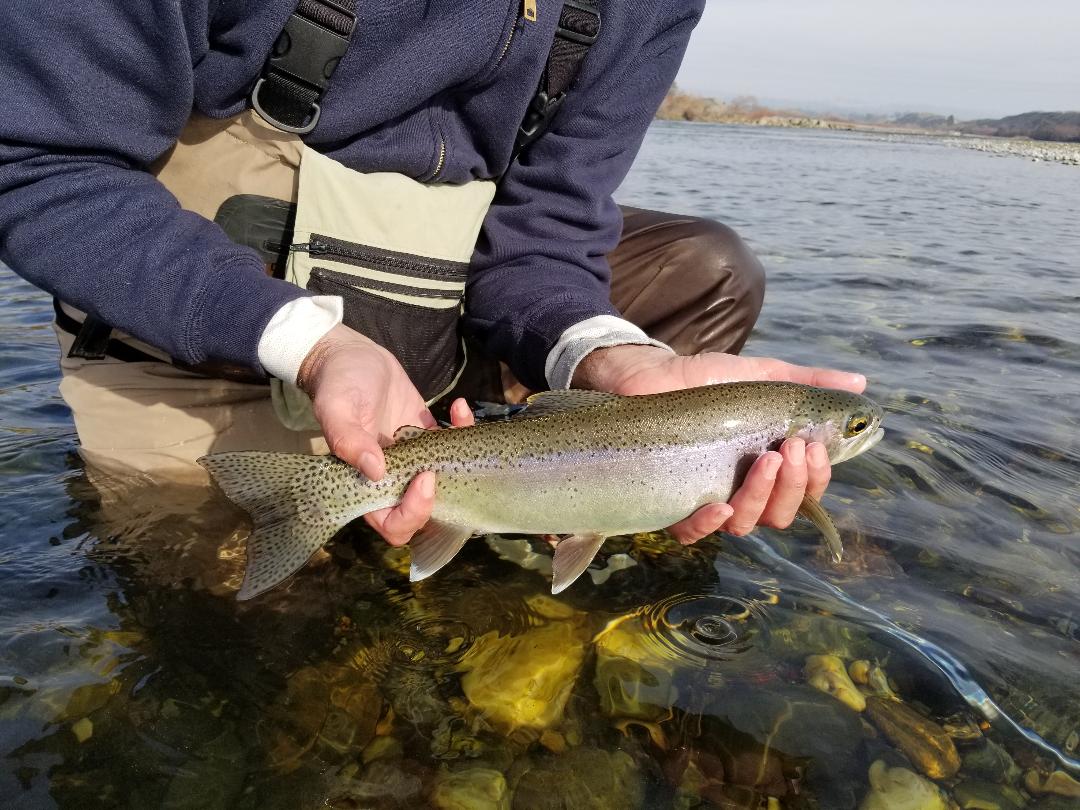
The actual fishing has been good one day, tough the next, decent the next day, then shitty, then really good. Most days we are working hard though. I’m seeing more and more “Clippers” (Feather River steelhead) in the Yuba, and some are serious tanks!

Euro Tight Line High Stick nymphing (ETLHSN) has been the most productive in the morning for the walk and wade angler. Right around noon time the PMDs are hatching, followed by the BWOs about an hour later. I love this time of year because once the mayflies are done, it’s time to hunt the Skwala eaters. The fish know the stoners are in the foam lines and are seeking them out. We had about 5 grabs in the afternoon during yesterday’s trip. The Skwala game will only get better for weeks to come.

The Brown Dun has been out since late December, and the fish are keying in on them. This unique and beautiful mayfly is often misidentified as a March Brown on regular basis by anglers and expert guides. Since they are from the swimmer family, swinging pheasant tail soft hackles in a size 10 or 12 into the bank can be fruitful. For the adult, the time tested Adams parachute has done well for me and my guests in years past. 


Most of the salmon eggs have hatched and alevins/fry are in the system and are being consumed by resident rainbows and steelhead. Pictured above is a great anchor fly for your Euro rig and super easy to tie. I bought the pre painted jig heads at Sportsman’s Warehouse in Reno, and then added a nub of a zonker strip and some pearlescent krystal flash. Basic and easy, plus it catches large trout.

Check out my buddy and fellow WildStream Fly Rods ambassador Shane Schuster’s Skwala nymph. Shane owns Dirty Rig Fly Co. and it one of the most gifted tiers I’ve ever seen. Once the shows start up again, make sure to check out his moves and the unique materials and techniques he uses on his patterns that crush!

That’s about it for the report for now, I’ve already got my days off planned from rescheduling with tying (I’m in need!), writing, administrative work, and a few special projects and educational blog posts I will be sharing in the very near future. There are zero dates left for guided trips on the Lower Yuba until the last week of March. I do have a cancellation list going, so contact me if you would like to be added. Thanks for your continued support!

See you on the water…

Bernie and @justin_goodstock_gettaclue of GuideBox


Sunday, January 24, 2021

Togens Nymph Competition Barbless Hook Review ~ 1/24/2021


This hook is quickly becoming one of my favorites. The bend offers better holding power on those acrobatic native Yuba River rainbows when going airborne, or below the surface of the water with those long powerful runs. Above are two of my favorite Hogan's S&M patterns tied on the Togens Nymph Competition Barbless hook in a size 16. A proven winning pattern tied on a slayer of a hook equals quality net time. Yep, nothing but net.

Togens Nymph Competition Barbless hook vastly increases efficiency of the strike and landing the fish. Its barbless long needle-like point makes for less injury to the fish for an easy quick release. These superior hooks are made of premium high-carbon steel, hardened for strength and durability, providing a long point life and an extremely strong hook. Togens hooks use a constant taper. This provides a reliable shape, assuring no weak spots, and provides a shocking speed of penetration, and often the hook set is done by the fish itself upon being eaten. Give them a try and I'm sure you will be as pleased with them as much as I am.

Check out Togens 3x heavy scud hook in sizes 18 and 20 too! It's really hard to find small scud/pupa hooks in a 3x heavy design which translates to a greater advantage in both strength and quick sinking submersible properties. For an excellent review on this hook, Check out Cat Toy's blog post here:

https://flyfishingwithcattoy.blogspot.com/2021/01/togens-scud-3x-hooks-review.html


Enter the code TOGEN10 and mention Baiocchi's Troutfitters to receive 10% off on your next order of hooks, beads, and other cool tying materials. With major weather coming in, it's looking like I'll be spinning up more bugs at the tying bench! See you on the water after the storms!


Wednesday, January 13, 2021

Lower Yuba River Fly Fishing Report ~ 1/13/2021


It’s been a while since my last Lower Yuba River Fly Fishing report, I’ve been extremely busy guiding, writing, attending to my yearly reports and logs to the US Forest Service for Plumas, Tahoe, and Lassen forests, and perfecting the details of my latest power point “Skwalas on the Yuba”, which you must check out when you get a chance. We are in another dry spell, though we did have a little drizzle and clouds yesterday which is what you want for good mayfly hatches. 

The flows on the Yuba have been low and clear and are currently right around 740 cubes, although Yuba Water Agency did bump it up a tad this morning to 755, then back down. We’ve had some wimpy storms, some stronger than others, but still the river has barely risen because the ground is so parched. The extended forecast into the fantasy range calls for a possible change from the 20th to the 25th allowing the storm door to open. We shall see…


Fishing pressure has been heavy at times, and other times it’s just my guests and I, and that all depends on where I choose to go, be it the weekends or the week days. Local inside knowledge is a big part of my guide service. The fishing has been good some days, and others pretty slow where you really got to work harder to see results. Typical Yuba, every day is different. For example last Friday was super slow, Saturday was on fire, Sunday was a little better than fair, and Monday’s trip was on fire where dreams are made – 8 grabs on the Skwala dry including stalking side water Skwala eaters in 8 inches of water. The best game ever.


The Skwala numbers are increasing every week, I’m seeing more nymphs in the idle side water pre staging for emergence, and more shucks on terra firma which equals to more adults. Also I’m seeing more adults in the foam lines, and fish eating them off the surface. The Skwala adults are incredibly hard to see in the drift, and for those whose eyes are not in tune with the full spectrum of analyzing real time conditions as they happen, it can be frustrating. Look for little dark colored twigs floating down the currents. 


Skwalas do not flap there wings while drifting like a golden, and there is very little movement on the surface, they placidly float down with only their little legs twitching about. Prime time for fishing the adult is in the afternoon, and they love warm sunny days. I’ve seen PMDs from about 10:30am to noon, and then the BWOs come out to play. The length of each hatch varies, so when you start to see either mayfly in the drift, change quickly and be ready before the great creator turns the switch off.

Also, the Brown Duns are out, not quite a size 10, but not a 12. They look a lot like a March Brown, but it is an entirely different mayfly, and much bigger. They are swimmers, and hatch on the shoreline just like a stone fly. Best presentation for this bug during the nymph stage is swinging soft hackles into the side water, and for the adult, an Adams parachute in dark gray has done well for me.


It was interesting last weekend as I observed 3 newer salmon digging out a redd. I was a little surprised to see that, but that’s why you don’t put rules on Mother Nature. She will break them time and time again.


For fly selection we’ll start with sub surface offerings. Hogan Brown’s S&M and Military May in PMD (#14, 16) and BWO (#16, 18, 20) schemes, worms (red, natural, brown), Red Copper Johns (#14, 16, 18), Zebra Midge (#16, 18), plain old pheasant tails with no flash (#14, 16, 18) though I do tie some with hot spots in floro orange, and of course Skwala Nymphs (#10, 12, 2xl) which are way smaller and more slender than you think. 

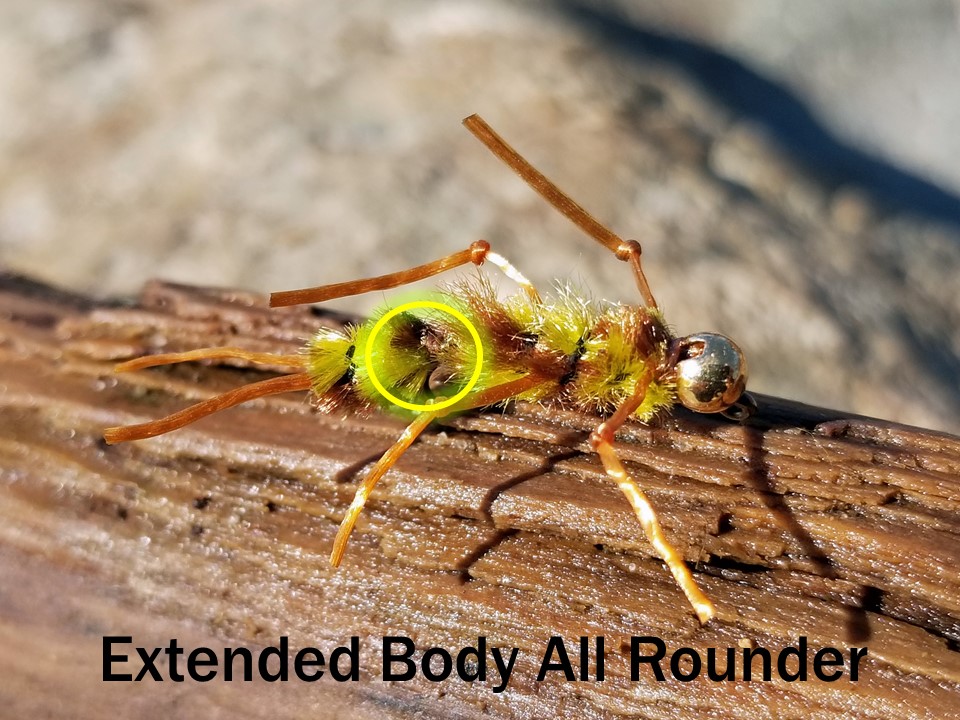
Here is my extended body all-rounder Skwala nymph which has been working extremely well. I copied a Pat’s Rubber Leg and tied the main portion of this jig fly on a Togens #8 60 degree jig hook, then added a nub of a #12 TMC 101 dry fly hook with the bend cut off. I attach it with a small loop of 3X tied in at the rear of the jig hook. The movement is incredible and is a strike trigger for hungry Yuba bows.


On the surface, let’s start with the main attraction for the next 2 months, Skwalas. My go to pattern has been Bitterroot River guide John Cook’s Unit Skwala, though the original pattern I got from a long time client and friend 12 years ago is not the same as shown above. I’ve tweaked the pattern to my own specs over the years while using important materials that are needed for the educated trout of the Yuba River. I’ll tie them in a size 10 2xl for the female, some with egg sacks, and some without. Size 12 2xl for the male and those males are pretty small. There are other patterns I use that I will not share on this blog, some from my mentor, and most tiers would laugh at those flies. They are super simple, that’s all I can say. Spending time on the river and observing the reaction to different patterns is a whole different world than sitting at a tying bench for hours cranking out flies.


This fly tied by my buddy Bud Heintz is designed for rough water, like really rough water! It’s fully dressed and you do not want to clip the hackle on the bottom to make it flush in the surface. I’ve been clipping the hackle short on dry flies for over three decades now, another lesson learned by my mentor on the McCloud River with the October Caddis hatch. No, you want this fly to be high and dry with maximum floating properties incorporated into it for the rough stuff.

We are long line Euro Nymphing (yeah whatever you want to call it, tight line, high sticking, direct contact nymphing) in the mornings until we start seeing aquatics on the surface and rising fish, then it’s time to switch over to your dry fly rod. I will say this, fishing dry flies from the bank on the Yuba is not a “make the cast”, mend, and hang on type of scenario, especially with the Skwala game. There is so much more to it. Remember, you are hunting a wild animal with a very high sense of alertness. You must assess the situation, the type of water you will be fishing, what your approach will be (fly first, or an upstream presentation), and lastly, careful observation before you even make the cast. It makes a huge difference. Observe more...Cast less.

You can get a really clear idea on how to do this by reading my article “Skwala Primer 2021 ~ Lessons Learned” in the December issue of California Fly Fisher, or attending one of my Zoom presentations that I will be presenting to many fly clubs in the next few months. You can check my schedule HERE. Some fly clubs will open my Zoom presentations to the public like Gold Country Fly Fishers did on the 5th. After checking my schedule, it can’t hurt contacting the club and seeing if you can get permission to tune in.   

There you have it, an honest and reliable report for the Lower Yuba River. If you really want to learn how to approach fishing off the bank as a walk and wade angler, look no further and shoot me an email at baiocchistroutfitters@yahoo.com for the most extensive guide trip you’ll ever have. My trips are next level guided fly fishing, where it is very important to me to share the knowledge so you can be more successful on your own. I only have 3 days left in January, and 2 left in February. A busy schedule ahead for the Skwala Man LOL!

See you on the water…


Total Pageviews